Biography
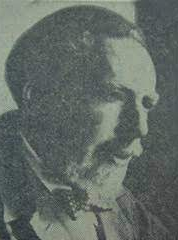
David Mitrany was the first Professor appointed in the School of Economics and Politics of the Institute for Advanced Studies at Princeton.
“…And what a life it was! Simply reading what he wrote over his long life, until his death in 1975, actually makes most of us, academics, frankly pale into insignificance a little bit… I`ve tried to count all his publications, not only his books, many of which had very strong policy orientation, particularly on the notion of peace, and it ends up to well over 200 publications, most of them still read today very well indeed.. This is really one of the great public intellectuals of the 20th century, as well as one of the great Romanian intellectuals. He stands along side of the great 20th century public thought… This is just an amazing individual.” (Michael Cox)
“Mitrany worked towards the development of effective peace organizations. […] At the outbreak of the Second World War, Mitrany became a member of the Foreign Office’s academic intelligence unit, and as early as June 1941 was setting out an “Agenda of peace making.” In another paper, “Territorial, ideological, or functional organization?” he expanded his own ideas, and at the end of 1942 he resigned to pursue these further. The results appeared in a pamphlet, A Working Peace System (1943), which had an immediate public appeal and was translated into various languages. Mitrany embarked on an extensive programme of lecturing, broadcasting, and writing, with the aim of ensuring that a new peace organization would not be handicapped by a rigid constitution (as had the League of Nations) but would be given the capacity to develop on functional and sociological lines. The validity of the functional approach was accepted and incorporated in the founding documents of the specialized agencies of the new United Nations.” (From the Oxford Dictionary of National Biography)
1888, 1st of January – David Mitrany was born in Bucharest, Romania.
1908-1911 – After completing his military service, he left the country for Hamburg, where he studied at the Kolonial Institut (later the University of Hamburg).
1912, autumn – Mitrany enrolled at the London School of Economics (LSE) to study sociology with L. T. Hobhouse and economics under Graham Wallas.
1914-1918 – During the war, Mitrany worked as an attached for the Romanian Legation in London, for the Foreign Office and War Office.
1916 – Mitrany became an active member of the first League of Nations Society, touring the country giving lectures on the need for and hopes of the new League.
1918 – He graduated as Bachelor of Science in Economics (BSc) from LSE.
1919–1922 – A fortuitous encounter with C. P. Scott, the editor of the Manchester Guardian, led first to a summer engagement of four weeks and then to a position on the editorial staff of the newspaper, from May 1919 to 1922, with special responsibility for foreign affairs. In 1922 his background paper on the illegality of France’s claim to occupy the Ruhr as a form of sanctions was used by the British Government in opposing the French claim.
During his time with the Manchester Guardian Mitrany spent three months as its correspondent in Berlin, and was able to arrange visits to the Krupp factory to prove that at that time armaments were not being manufactured.
In 1922 Mitrany embarked on a new career as Assistant European Editor of a series of publications on the economic and social history of the war, which was being prepared, sponsored and financed by the Carnegie Endowment for International Peace under the general editorship of James Shotwell. This experience formed the basis for much of the later development of Mitrany’s thought, as he worked with authors from many different countries and backgrounds, and acquired detailed knowledge on problems such as sanctions, minorities, nationalism, land disputes and agrarian reform, and the increasingly close relationship between politics and economics.
1924-25 – Mitrany had his first visit to the United States, invited by Carnegie Endowment.
1923 – He married Ena Limebeer, a writer and artist, and they moved from London to the countryside, in Kingston Blount near Oxford, which became their home for the rest of their life.
1924, March-May – Mitrany together with E.T. Scott, C.P. Scott`s son, embarked on an extensive European tour, visiting 10 countries. Mitrany with his wide knowledge and close contacts with a variety of political figures, particularly in Eastern Europe, introduced the young Scott to new ideas and different needs in post-war Europe. One outstanding interview for the two men was with Mussolini, another, as Mitrany recalled, with King Carol of Romania.
1918-1931 – Becomes a member of the Labour Party Advisory Committee on International Affairs, without ever being a party member.
1929 – Mitrany rounded off his academic qualifications with a PhD in Economics at LSE and a Doctor in Science (DSc) in Economics in 1931.
1931-33 – He accepted a visiting lecturership for two years at Harvard University. In 1932 came the invitation to give the influential Dodge Lectures at Yale University, which traditionally dealt with problems of the responsibilities of citizenship. He was given the opportunity to widen the scope of the lectures and to present his views on national politics in the international context; in the third of his lectures, ‘The Communal Organization of World Affairs’, he outlined for the first time his functionalist ideas. When the four lectures were published as a collection in 1933, the title, The Progress of International Government, was an indication of where his thoughts were leading.
1933 – He is appointed as Professor in the School of Economics and Politics at the Institute of Advanced Study at Princeton University. His was the first appointment in the School and he was the only non-American. The Institute was both a prestigious establishment and an experiment: there were no students, no lectures; it was to be a ‘society of scholars’, with time for thought and study, and Mitrany’s friends and colleagues included Albert Einstein and Robert Oppenheimer.
1938 – During the Munich crisis, he was approached by the British Foreign Office with a request that in the event of war he should become a member of an academic intelligence unit, a think-tank with the task of observing and commenting, and proposing solutions for the problems that war and the subsequent peace would bring. Ostensibly the group would be under the direction of the Royal Institute of International Affairs (RIIA), but its work was to be exclusively for the Foreign Office, while each member was to be independent, not subject to political pressure.
1939, September – as the war broke, he joined this group, the Foreign Research and Press Service, which had its headquarters at Balliol College, Oxford. In the series of papers that he prepared and put before the Foreign Office in the next three years, he offered ideas that were new and, from the point of view of the Foreign Office, sometimes unwelcome, in looking at the likely outcome not of the war but of the peace that would follow.
1942 – He resigned from the group (which was already considerably diminished, as others like himself were finding it difficult to accept the Foreign Office’s definition of independent thought) in order to work freely on his own ideas. The results appeared in a small pamphlet with the unassuming title, A Working Peace System: An Argument for the Functional Development of International Organization.
1943 – RIIA published the first three editions of the paper, which had a considerable impact. Translations were made into Italian, Danish and Norwegian, and copies were smuggled into Europe for use by resistance groups.
In the last two years of the war, with the country looking towards peace, Mitrany, like other political thinkers, was active in talking, writing, lecturing and broadcasting. His main aim was to ensure that the new peace processes would be based not on a constitutional approach with a rigid framework of a peace conference, like the 1918 Versailles Treaty, but on the practical and pragmatic requirements of recovery in Europe and the rest of the world, an approach that was functional and sociological.
1946 – As the RIIA had exhausted its paper quota, a new edition of A Working Peace System, with a new introduction, was published by the National Peace Council. By then there was peace and a new international organization was coming into existence. Mitrany in his introductory essay acknowledged the advantages of the United Nations over the old League, in particular that the new organization had been established to take account of economic and social functions. Indeed, Mitrany’s ideas as set out in A Working Peace System were recognized and accepted, to be embedded in the founding documents of the specialized agencies of the UN.
After the war he returned as Professor at Princeton.
He was approached by the multinational corporation, Unilever Ltd, and invited to be its adviser on international affairs. It was a bold and imaginative approach, and a unique one, which came about as a response from the Chairman of Unilever to Mitrany’s statement that after the war there would be little to separate economics and politics, and that decisions for the one would be dominated by the policies of the other. The experiment was to last until his retirement in the early 1960s.
Over the next few years his writings on aspects of international politics were considerable, as were his lecturing tours both in the UK and on his visits to the USA.
1951 – Mitrany published one of his most important contributions, „Marx against the Peasants: A Study in Social Dogmatism”, related to his earlier studies and career, as well as his Romanian background. Translations appeared in the next few years in Italian, Chinese, Korean, Japanese, German and Portuguese.
1957 – Concerned about the rights of the individual opposed by the state, he investigated the solutions of other countries and looked at the Scandinavian institution of the Ombudsman. In 1957, at his own expense, he had the various Swedish documents translated and, in two articles in the Manchester Guardian, discussed the possibility of introducing this institution into the British political system.
1958 – Mitrany instigated a study project at the small independent institute, Political and Economic Planning (of which he was an active member of the executive committee), to examine the interlinked relationship between British trade unions and the Labour Party, a dependence which, he believed, was bound to distort the progress of both. In particular, he was concerned that the antiquated outlook and practices of the trade unions, with their dogma entrenched in nineteenth-century battles, would defeat any serious schemes for economic planning which might be introduced as the basis for a Labour government.
The creation of the European Coal and Steel Community, the signing of the Treaty of Rome and the beginning of the European Union incited a new interest in the functionalist theory, Mitrany was being requested for more articles and information from all over the world.
1966 – A collection of his essays was published in Chicago with the cooperation of the Society for a World Service Federation and with an introduction by Hans J. Morgenthau in the new book, also entitled A Working Peace System, the full text of the 1943 pamphlet was reprinted.
1967 – In his eighties, Mitrany continued to lecture, embarking on a three-month tour of US academic centres Harvard, Yale, Columbia with lectures, talks and television interviews.
1969 – An outstanding conference of academics met at Bellagio under the sponsorship of the Carnegie Endowment for International Peace and the Institute for the Study of International Organization of the University of Sussex. Its overall title was simply ‘Functionalism’, and Mitrany presented the opening paper in which he summed up all that he had been saying over the past forty years, putting it in the context of future political and social developments.
1975 – Further publications, and an overall examination of his ideas appeared in edited by A. J. R. Groom and Paul Taylor, Functionalism: Theory and Practice in International Relations, to which Mitrany contributed another paper, `A Political Theory for the New Society`. The LSE arranged for a further publication of his collected writings with the addition of a personal memoir and his notes on his career: in The Functional Theory of Politics, David Mitrany’s theory was reiterated in an historical perspective as he discussed how in the light of his experiences and of history, his functional approach to international politics had developed.
1975, July – David Mitrany passed away.
(Based on The Functional Theory of Politics, by David Mitrany (St. Martin’s Press, 1975) and Dorothy Anderson. David Mitrany (1888–1975): An appreciation of his life and work. Review of International Studies, 24:577–592, 1998.)
“The problem to which Mitrany devoted his working life was how to bring states closer together to deal with issues which transcended territorial boundaries, and the ‘approach’ that he adopted to deal with the problem is known as ‘functionalism’. Mitrany inspired a whole generation of students of integration, both practically and theoretically, and his work can still be read with great profit today.” (Martin Griffiths, Fifteen Thinkers in International Relations, p. 190)
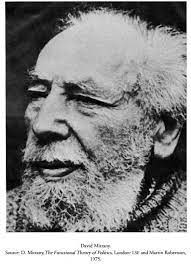
“What we can take away from Mitrany: a non-dogmatic approach to thinking about real world problems. I think IR has taken a very serious theoretical turn in the last 15 years. And I think one of the things that Mitrany does is to kind of keep your feet on the ground a little bit. I think one of the wonderful things about Mitrany, looking at his life, coming from where he came, and come to study in London, going back to the States, working for Unilever, working in Chatham House, advising government, writing all the time, he is always looking to solve a problem. It is also a very important example of someone who is a great public intellectual, but not narrowly academic. I think it`s wonderful looking at that life of his, so many different careers, bungled in a life experience, both as public intellectual, as writer, as a brilliant academic, but someone also wanting to get his hands dirty: ‘there`s real world problems out there, let me try to come up with a genuine solution to those problems in a non-dogmatic way’… accepting the world as a difficult place, in a non-utopian sense”. (Michael Cox)